
The Challenge of Ethical Protection
Pastor Tim Howard, M.A.H.S.
The Basis of Law
Law is the guide for protection professionals—or, as we will call them, watchmen. It is the framework for protection, defense, and enforcement. The laws that act as the braces holding the rungs of society’s ladder do not hang in the air; they require a firm structure to rest upon. The basis for law is the Word of God.
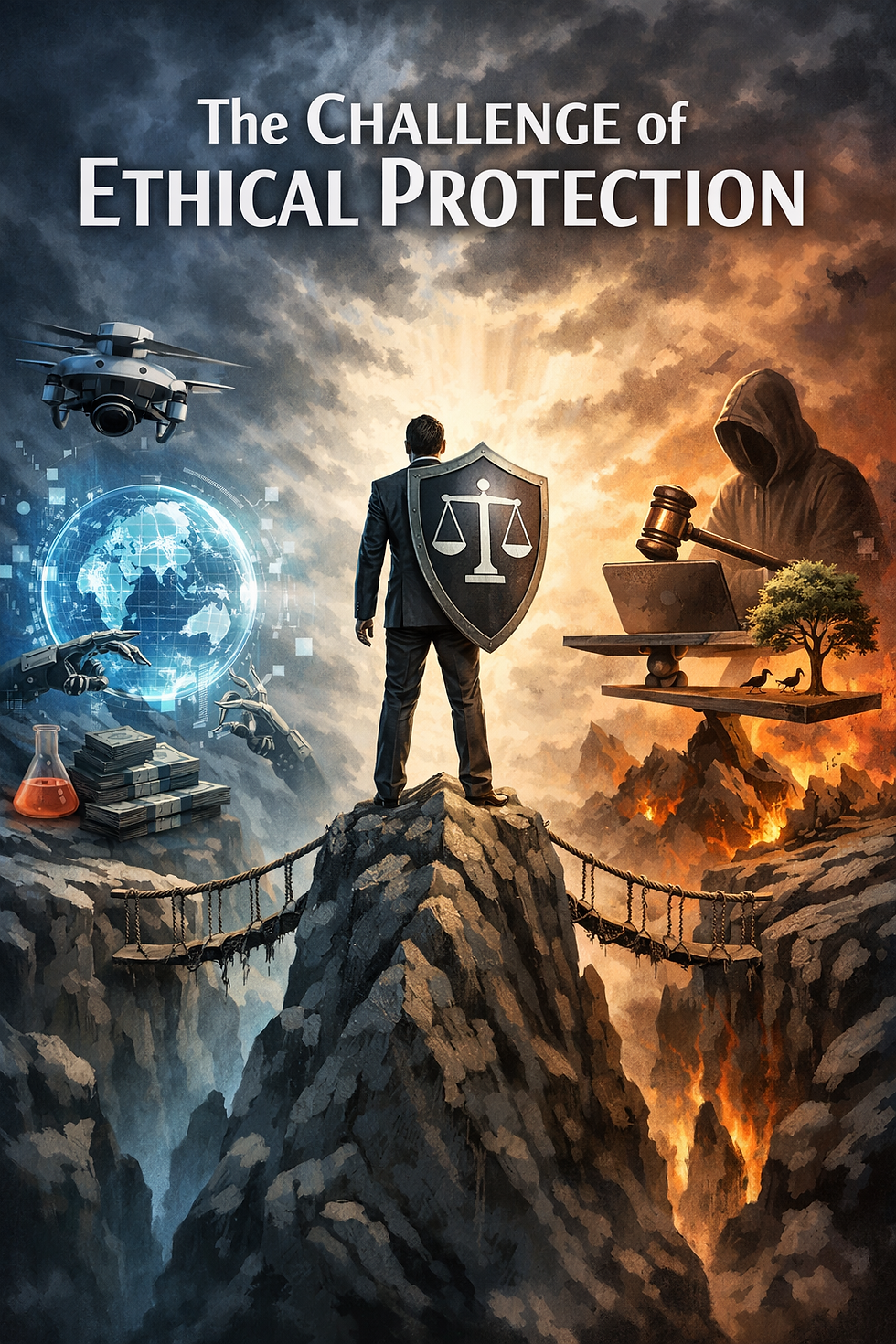
Law includes protections from harm to both people and property, along with basic moral guidelines. The beginning of ethical protection is God’s authority. Laws are not meant to be a collection of public opinions or emotional preferences. They are intended to be solid parameters for all people to follow. Properly formed law is designed to protect people and property from damage and exploitation.
This follows the second greatest commandment summarized by Jesus:
“And you shall love the LORD your God with all your heart, with all your soul, with all your mind, and with all your strength.” This is the first commandment. “And the second, like it, is this: ‘You shall love your neighbor as yourself.’ There is no other commandment greater than these.” (Mark 12:30–31, NKJV)
Good law is based on love—love for others. This love translates into compassion, care, concern, and unity. This is what God desires for humanity.
“For the LORD is our judge; the LORD is our lawgiver; the LORD is our king; He will save us.”
(Isaiah 33:22)
Good laws are designed to save people—saving them from exploitation, deception, and harm. Law, in its godly form, is meant to minister God’s love to humanity.
“The law of the LORD is perfect, converting the soul…” (Psalm 19:7)
Understanding the foundation of law gives the watchman a 360-degree view of their responsibility with enforcing it. Law is not merely a list of preferences, as those who break it would prefer to believe. It is a template of boundaries that allows a society to treat others as they themselves would want to be treated. Ultimately, good law should reflect the principles of God’s will for humanity.
The Foundation of Integrity
The badge does not solely represent power and authority—it also represents integrity. How do you live your life when you are not wearing the badge? How do you live when no one is watching? Integrity is doing the right thing no matter the circumstance.
“The integrity of the upright guides them…” (Proverbs 11:3)
The watchman not only enforces the law but understands its purpose and intended outcomes. The watchman allows the law they enforce to shape them into leaders with strong values and a genuine concern for the good of humanity. Integrity is the practical application of those values.
Maintaining integrity while working in an environment filled with false information, manipulated images, hostile citizens, and chaotic leadership is no small challenge for today’s watchmen. How does one maintain integrity while balancing the emotional weight that comes with enforcing laws that are not always respected—even by those who created them?
The Fallacy of Feelings
Whether someone is screaming in a watchman’s face or leadership is denying the authority needed to do the job effectively, emotions can run high. Watchmen experience anger, sadness, agitation, and frustration like anyone else. The difference is that the watchman is trained to rein in those emotions before they lead to a negative or destructive response.
“The heart is deceitful above all things…” (Jeremiah 17:9)
Feelings serve a purpose, but they are unreliable without proper discernment. They must be evaluated within the context of God’s truth to be trustworthy. Acting on unchecked emotions can cause a watchman to step outside their integrity zone and potentially regret their decisions.
Through training, the watchman learns to base decisions on the truth—or the closest available version of it in the moment. They are trained to continually assess situations, seek clarity, and identify cracks in the narrative that may point in
another direction.
In the current chaos of American society, emotions often dominate public interactions. These emotions influence people to say and do things that can negatively impact watchmen. At times, individuals intentionally provoke reactions that could lead to serious consequences for the officer. In such emotionally charged environments, it can feel like an impossible situation to navigate successfully. If feelings cannot simply be turned off, how can watchmen maintain an ethical posture during moments like these?
Boots of Confidence
As any watchman will tell you, confidence is essential in this line of work. You must know who you are and where your boundaries lie. Confidence does not always come naturally. It does not come from the badge, nor does it come from aggression or anger. True confidence comes from knowing and living God’s truth.
“Have I not commanded you? Be strong and of good courage; do not be afraid, nor be dismayed, for the LORD your God is with you wherever you go.” (Joshua 1:9)
When we stand on God’s side, there is nothing to fear. Living a life grounded in truth gives the watchman confidence that they are doing what is right. With every command issued and every investigation conducted, the watchman must know that they are contributing to the betterment of humanity in the eyes of God. Every decision should be weighed in light of God’s purpose of rescuing people from the grip of sin and death. When individuals step outside the law, consequences exist for a reason—and that reason ultimately serves the cohesion and stability of society. The watchman does not exist to dominate, but to remain unmoved.
Conclusion
Strong ethical integrity grows out of confidence in God’s truth and submission to His will. The watchman is not only working for the public; he or she is working for God while performing one of the most difficult roles on earth. Regardless of the protection environment, the responsibility is demanding and often unforgiving, yet critically necessary for society.
Now more than ever, operating on a solid foundation is essential for mental, physical, and spiritual well-being. The watchman must remain faithful—for the people they serve and for God. Watchmen across the world must live with integrity, setting an example of what it means to truly live what one believes. Ethics begin with truth.


Comments